


Hello and welcome to The Lancashire Lead.
Labour figures in Lancashire will have been buzzing at the start of Monday when they were able to confirm - via the BBC - that they had secured the first defection from Reform UK to Labour.
By the afternoon, that was kicked squarely into the long grass with the announcement that local government reorganisation would be paused and reviewed. Life, truly, comes at you fast in local politics.
In delaying, the government has taken legal advice which - given the outcome - you would presume tells you that the process would be vulnerable to the legal challenges that were coming.
It means that local elections will go ahead as planned in 2027 - and that the elections to “shadow authorities” planned for the same time will not go ahead.
It’s not clear what the government hopes will happen next. What we know with absolute certainty though is that Andy Burnham will want Lancashire to have an elected mayor - and that was considered the natural endpoint of local government reorganisation for many.
And what it absolutely means is that, as long as the government review is ongoing, Lancashire remains in stasis over its future.
Lancashire briefing
🌹 A county councillor has become the first politician in the country to defect from Reform UK to the Labour Party.
Nigel Swales was one of the 53 councillors elected to for Reform UK at Lancashire County Council in May 2025. He represents Skelmersdale East.
The Lancashire Lead understands that conversations regarding the defection had been taking place for at least several weeks and that Cllr Swales had been in discussions with the regional office of the Labour Party.
He cites his decision as being in response to the ‘scandal’ that the party has been embroiled into during his time in office.
The Lancashire Lead has been told, on a number of occasions over the summer, that potential defections could be on the cards. At least three have spoken to the Conservatives about a potential switch, while Restore Britain could be tempting for those on the right of the party.
Cllr Swales becomes the second councillor to leave Reform UK at Lancashire County Council after Cllr Leon Graham left to join the Conservatives in July. That means Reform UK has 51 councillors and their majority remains a comfortable one.
Cllr Mark Clifford, who leads Labour at Lancashire County Council, stressed that they would only welcome ‘moderates’ over from Reform UK.
Cllr Simon Evans, Reform UK’s deputy leader at the authority’ said the defection is a “massive jump” and needs a by-election.
It’s worth noting that Cllr Stephen Atkinson, Reform UK’s leader at Lancashire who also holds his seat at Ribble Valley Borough Council, has not defended his borough seat since defecting from the Conservatives to Reform UK.
🤐 Plans that would see Lancashire County Council become the first UK authority to pull out of refugee settlement schemes will be revisited at a special scrutiny meeting on Friday (11 September).
The move - agreed by the Reform UK-led authority at a cabinet meeting last week - was criticised as xenophobic by two opposition party leaders and condemned by others, along with campaign groups.
The Lancashire Lead now understands that at least three opposition leaders have signed NDAs regarding the contents of “Appendix C” from the report prepared in advance of the cabinet meeting.
That is because Appendix C contains “confidential information relating to the options, context and implications of Lancashire County Council’s delivery of refugee resettlement schemes.”
We asked a number of questions to the authority, all of which were unanswered by the time of publication.

🤝🏻 Hyndburn and Haslingden MP Sarah Smith has been appointed to a Government role at the Department for Education, giving the East Lancashire MP a position close to the heart of ministerial decision-making.
The first-term MP has previously carried out research and campaigned on issues relating to youth unemployment for years, with a particular focus on those termed as Not in Education, Employment, or Training (NEETs).
With this background, Ms Smith has now been named as a Parliamentary Private Secretary (PPS) to Education Secretary Lucy Powell, the Manchester Central MP who took charge of the department after Prime Minister Andy Burnham seized power earlier this summer.
Parliamentary Private Secretaries are unpaid ministerial aides who act as a link between ministers and backbench MPs, helping departments stay connected to parliamentary opinion while gaining valuable experience within government.
The appointment marks a significant step for the Hyndburn MP, who was first elected as Labour MP for Hyndburn at the 2024 general election, when she unseated Conservative incumbent Sara Britcliffe.
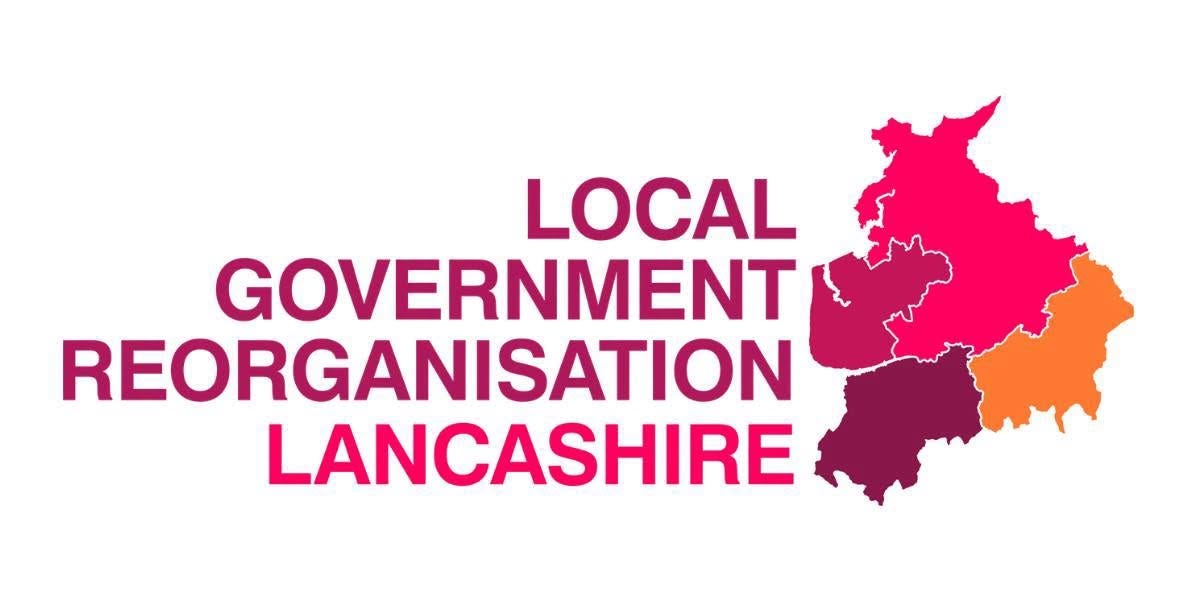
Local government reorganisation in Lancashire in disarray after government pauses process
By Paul Faulkner and Luke Beardsworth
The future of local government reorganisation - and with it devolution - has been set back at least 18 months after the government announced the process has been paused while checks are carried out to ensure it is lawful.
All 15 main local authorities in the county are due to be scrapped in April 2028 as part of a government-ordered restructure designed to streamline the council landscape in almost two dozen areas nationwide.
News of the hold-up prompted Reform UK’s Lancashire County Council leader Stephen Atkinson to renew his previously rejected push for a local referendum on the subject.
Meanwhile, Wyre Council leader Michael Vincent said the process should now be abandoned completely – and the leader of Lancaster City Council, Caroline Jackson, insisted the government should go “back to the drawing board”.
Reaction from local authority Labour figures was slow to emerge - although Burnley MP Oliver Ryan showed his support for the move having long opposed any plans to merge his area with Blackburn. Similarly, Sarah Smith - the MP for Hyndburn and Haslingden - said it was important that the government got the details right.
It is less than two months since Lancashire was told the size and shape of the councils that would replace those whose days were believed to be numbered – when four sprawling, all-purpose new authorities were unveiled to serve North Lancashire (or any alternative name proposed), South Lancashire, Pennine Lancashire and the Fylde coast (or any alternative name proposed).
They were set to take over in little more than 18 months’ time from Lancashire County Council and the authorities covering Blackburn with Darwen, Blackpool, Burnley Chorley, Fylde, Hyndburn, Lancaster, Pendle, Preston, Ribble Valley, Rossendale, South Ribble, West Lancashire and Wyre.
However, Angela Rayner announced in the Commons on Monday afternoon (7 September) that the revamp planned for the county – the biggest for more than 50 years – was being put on hold, along with most of the others under way across England.
The Secretary of State for Housing, Communities and Local Government said that “in light of legal advice” she wanted to satisfy herself that “the right process is in place [which] is robust and, of course, complies with the law”.
But she also pointed towards a broader reassessment of the principle underpinning the changes – which she herself set in train back in December 2024 under Sir Keir Starmer – by launching a “rapid review” of the entire reorganisation programme.
“I want to fully test whether our proposals for local government reorganisation meet the priorities of the new administration and the new Prime Minister,” Ms. Rayner added.
The shock announcement leaves Lancashire’s existing authorities in local government limbo, with no certainty as to whether their demise has simply been delayed – or indefinitely dodged.
Asked by South Ribble MP Paul Foster to confirm that reorganisation was “still a commitment of this government” – and that the county would “hopefully” move to the agreed four-council model in Lancashire, Angela Rayner said she was “absolutely committed to making sure areas like…Lancashire do get local government reform”.
“This is a pause and I haven’t taken that decision lightly,” she added – without making any promises regarding the specifics of the four-way split announced nearly two months ago.
One thing the government has confirmed is that elections to establish so-called ‘shadow’ versions of the replacement authorities – which were due to take place in May 2027, giving the new organisations 11 months to operate alongside the councils being axed – are now off.
Instead, polls will be held for those current local authorities that would have been due to stage them on the usual electoral timetable. That means 13 of the 15 existing Lancashire councils will see votes take place next year, with the exceptions being Rossendale and the county council, for which elections were not due until 2028 and 2029, respectively.
The move suggests that the planned timetable for the new councils – if they are still ultimately formed – has been pushed back by at least a year.
County Cllr Atkinson, the ruling Reform UK leader at County Hall – and a longstanding and vehement opponent of the proposed council changes – said the delay was a chance to ensure the voices of Lancashire residents were heard on the issue.
Despite reports in other local media, Reform-led Lancashire County Council did not mount a High Court challenge against local government reorganisation. Such a move would need to approved by cabinet.
