


Hello and welcome to The Lancashire Lead.
Lancashire remains on track to be the only place in the north without an elected mayor. In fairness, this week’s meeting was unlikely to change that.
Its continued absence ultimately means a less funding for Lancashire with Lancashire County Council’s leader, Reform UK’s Stephen Atkinson, remaining the most outspoken and high profile sceptic of an idea.
It does rather feel like a debate that should be put to bed by now - as evidenced by where Lancashire is compared to the rest of the north - but it will rumble on for some time yet. Today’s edition looks at this week’s meeting and what happens - or doesn’t happen - next.
Interested in the idea of a Mayor for Lancashire? Not sure whether it's a good or bad thing? And where does local government reorganisation fit in? Ed Walker be hosting a discussion, put on by the Preston Partnership, about that very subject on Wednesday 14 October from 6pm-8pm at Cotton Court. It's free to attend, you don't need to be a Preston Partnership member, and he will be quizzing politicians, business leaders and lobbyists for their thoughts about the Devolution journey in Lancashire. Register here for a place.
Lancashire briefing
🩸 Wyre Council leader Michael Vincent has called on the Government to make an urgent intervention over historic contamination in parts of Thornton by cancer-causing chemical PFOA.
Cllr Vincent say the issue is too big to leave to local councils and even the Environment Agency and is a national issue rather than just a local one.
He was speaking after it was revealed that blood tests carried out on residents in Thornton have proved two thirds of those tested have ‘high levels’ of the toxins in their systems.
The revelations came after a law firm instructed blood tests for 49 residents to see if their blood contained high levels of the toxic substance, following confirmation by the Environment Agency that three sites in Thornton were contaminated by the man-made chemical Perfluorooctanoic Acid (PFOA).
PFOA is known to accumulate in blood and can cause cancer, immune system disorders, as well as high, bad cholesterol.
There are calls for action against utility companies that dig up Lancashire’s stone pavements during roadworks – and then fail to replace the flags they removed.
Councillors in West Lancashire have highlighted half a dozen streets where tar has instead been used to fill in the holes – creating what one resident described as a “patchwork quilt” effect in what was previously pristine paving.
The likes of gas, electricity, water and telecoms firms are bound by national rules designed to ensure any roads they have to excavate are restored to an appropriate standard – which means matching replacement surfaces to their surroundings wherever reasonably practical.
‘Interim’ repairs that fall short of that standard are permitted for a period of up to six months, but should then be made compliant and permanent.
However, County Cllr Gordon Johnson, a member of the Our West Lancashire (OWL) group on Lancashire County Council, says companies carrying out work in Ormskirk are “often getting away with a quick black tar job and leaving town never to return”.
💷 The topic of a toll on the M65 will not go away despite broad agreement that it was a hypothetical suggestion to a rather unique problem.
Last week, Reform UK’s Accrington North representative at Lancashire County Council, Cllr Joel Tetlow, floated the idea of introducing a toll on the major route between Junction 10 and 14, stretching six miles from the Burnley turning to Colne.
This idea was suggested as the Reform group in charge at county hall has to find £15 million to tackle drainage problems on the route, which due to a historical quirk, is one of the few stretches of motorway looked after by a council, rather than National Highways.
While bad ideas should be described as such if that is what they are, Oliver Ryan, Labour MP for Burnley, has launched a petition against the idea that nobody is suggesting will happen.
Repeatedly-delayed meeting over potential elected mayor for Lancashire finally happens
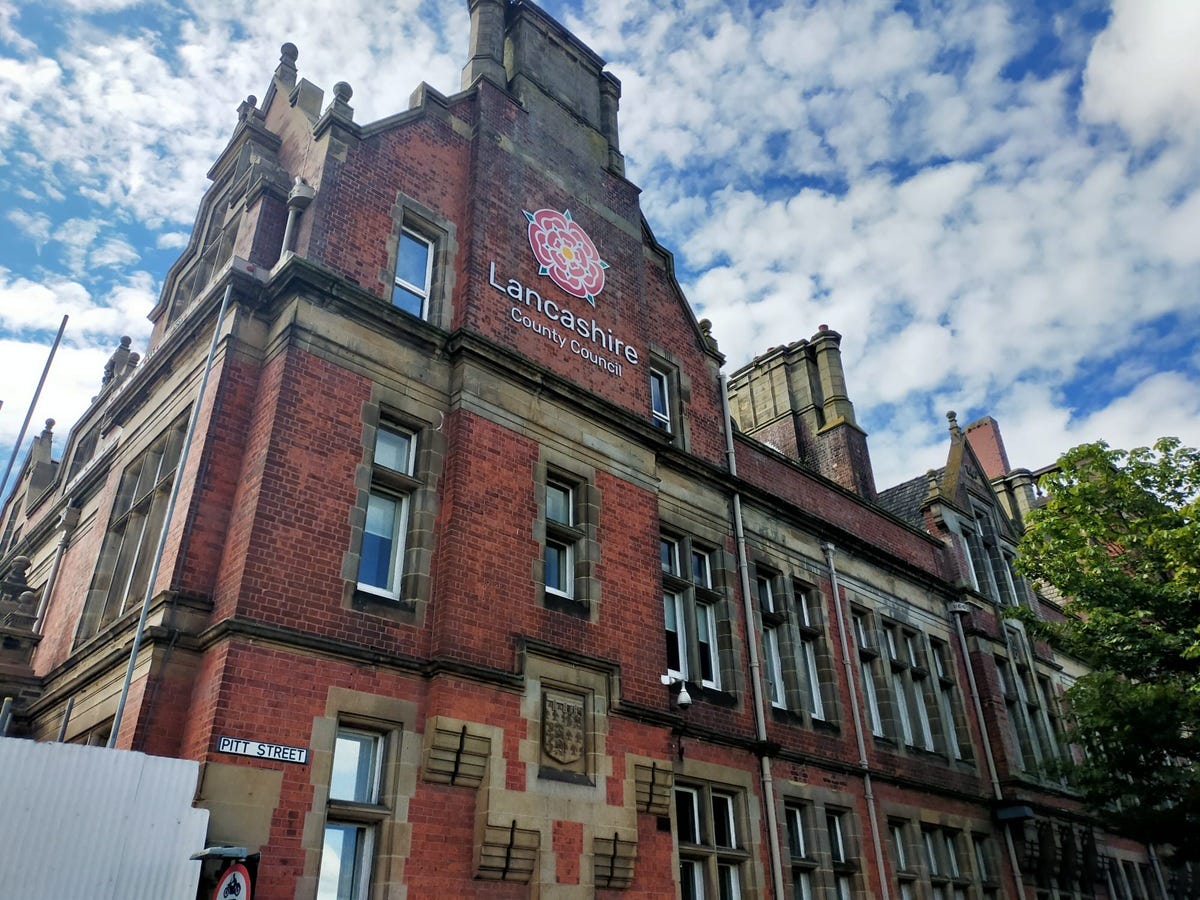
By Paul Faulkner & Ed Walker
Lancashire has been told that securing an elected mayor for the county is “a priority” for the Prime Minister and could come with a £1bn funding commitment.
The message was delivered during a long-awaited meeting between the government and the leaders of Lancashire County Council, Blackpool Council and Blackburn with Darwen Council, who collectively also head the Lancashire Combined County Authority (LCCA) devolution body.
It took place on Tuesday (22 September) when devolution minister Jim McMahon MP visited County Hall for a gathering that had first been requested by the trio last December – and twice since cancelled by one of the minister’s predecessors.
The meeting was originally sought to elicit a government response to a list of demands on which Lancashire had previously indicated its support for a shift to a mayor-led devolution model would depend.
Blackburn with Darwen Council leader Phil Riley said that, during the discussion, Mr. McMahon stressed that “getting Lancashire into mayoral devolution was a priority, not just for him, but for Andy [Burnham]”.
The minister indicated he would expect Lancashire to receive a cash sum – to go with the additional devolved powers conferred on a mayor – that would be equivalent to similar-sized counties that have already done a deal.
An approximate figure of £35m a year over 30 years – just over a £1bn in total – was mooted, although Mr. McMahon emphasised he was unable to make a formal commitment on behalf of the Treasury by pre-agreeing any precise amounts.
The issue of funding had been one of the key matters on which the LCCA had sought clarification in a letter sent to the government shortly before last Christmas. The authority had said its willingness to “engage positively and explore the principle of mayoral devolution” was based on an assumption that the county would be handed “circa £36m” – putting it in the gold standard bracket of devolution deals.
The Prime Minister has made no secret of the fact that he wants to see more ‘metro mayors’ rolled out nationwide, flying the flag for their areas just as he was able to when he held the position in Greater Manchester.
However, Lancashire has had a historically ambivalent relationship with the prospect of installing a mayoral figurehead – and its 15 main council leaders have rarely found themselves on the same page over the subject despite a decade of internal debate.
It was for that reason the three so-called ‘top-tier’ authorities that now make up the LCCA agreed a mayor-free devolution deal with the last Conservative government back in 2023 – eschewing the greater powers and financial rewards that would have come with a mayoral arrangement.
The agreement was rubber-stamped by the incoming Labour government in September 2024. However, at the time, Jim McMahon – when he previously held the devolution minister post before being briefly reshuffled out of the role – invited Lancashire to bring forward proposals for a “deeper” deal within the next 12 months.
That was widely interpreted as code for agreeing to elect a mayor – and sparked an LCCA-led review to assess whether and how the county would benefit from such a move.
