


Hello and welcome to The Lancashire Lead.
The starting point for today’s research, carried out by Lancaster University, was the belief that everyone should have access to secure and rewarding work. But it was little surprise that the research found that this wasn’t the case.
Poor bus connections, obtuse application processes and a lack of support in navigating those challenges were all cited as barriers for young people who want to enter work - but the work doesn’t seem to want them.
The government has started to tackle these issues with a number of initiatives - but it needs to go harder and faster to deliver meaningful change. And local authorities need to do what they can to unlock the powers to tackle the challenges in a focused way.
If you’re reading this, we need your support. The Lancashire Lead can only continue to publish the news that has much bigger titles scrambling to mimic us if we have paying subscribers. We are ad-free and clickbait free - only the news that matters most before everyone else gets to it. Consider taking a paid subscription here and keep independent journalism alive and well in Lancashire.
Lancashire briefing
🏥 Plans are being drawn up to ensure blood tests continue to be processed for patients across East Lancashire after 20 days of strike action were announced at the Royal Blackburn and Burnley General hospitals. Biomedical staff within the Unite union are set to walk out on four separate occasions in less than a month – starting next week. The striking workers analyse routine and urgent blood samples ordered by GP surgeries and other primary care facilities – as well as those taken from hospital patients. The industrial action is part of a dispute over holiday pay. The two affected hospitals are run by East Lancashire Hospitals NHS Trust (ELH). However, most health service pathology staff across Lancashire now work for Lancashire Teaching Hospitals NHS Foundation Trust (LTH) after that organisation became the ‘lead employer’ for the service – everywhere except West Lancashire – in April. The hospitals operated by LTH – the Royal Preston and Chorley and South Ribble Hospital – are unaffected by the walkout, as are those in Blackpool and Lancaster.
🌳 Anti-fracking campaigners have reacted with delight after the firm that operated a controversial drilling site in Fylde was given six months to restore it to the farmland that it used to be. Lancashire County Council has issued an enforcement notice in relation to the plot, off Preston New Road in Little Plumpton. The move comes after the authority refused a request from energy firm Cuadrilla to allow it an extra two years to restore the land – on top of a time extension that had already been granted. The enforcement action now announced by County Hall prompted one resident to declare that the community was looking forward to “finally waving [the company] goodbye”. The site attracted a near-permanent presence from protestors after fracking activity began there in April 2017.
🏠 A plan for new homes on 14 acres of Lancashire farmland has narrowly been approved, prompting disappointment among objectors. The decision has sparked concerns among some that it could pave the way for plans for hundreds more homes in the future. Wain Homes North West has been given permission to build 122 homes on land east of Prescot Road in Aughton, near Ormskirk. West Lancashire Council’s planning committee narrowly voted in favour of the plan this week, with six councillors in favour and five against. Supporters say it will help meet housing needs and is well-designed. But the application has prompted hundreds of objections over concerns about the loss of farmland and pressures on local health services and roads.
How to tackle the complex issue of young people who cannot get their first job
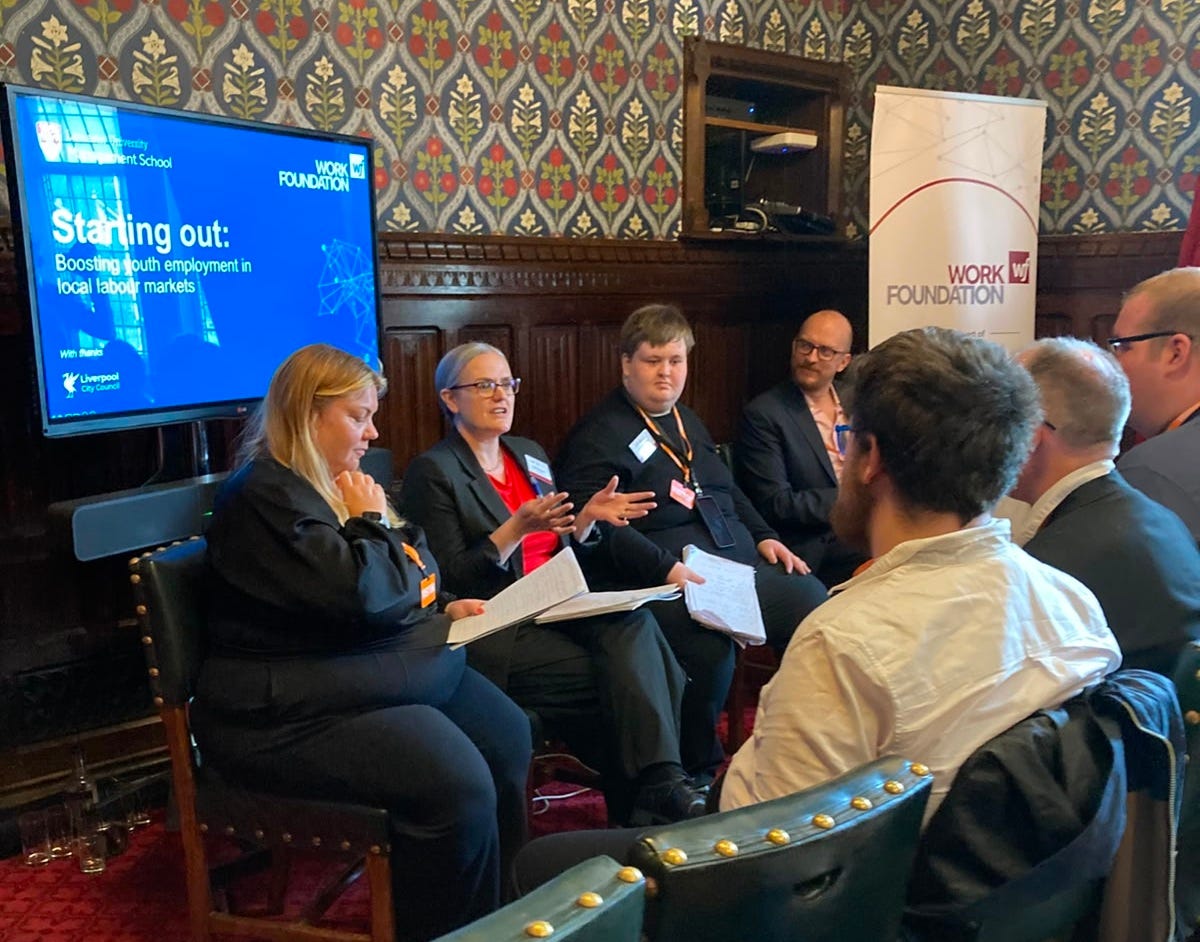
By Luke Beardsworth
The UK has entered a youth unemployment drought triggered by a lack of opportunity, transport and low self-confidence, according to research that focused on a seaside town in Lancashire.
The publication of a report titled ‘Starting Out: Boosting Youth Employment in Local Labour Markets’ used Morecambe as a case study and even described it as a ‘former’ tourism destination.
The report was pulled together by Lancaster University and found that jobs that would be accessible to people entering the workforce for the first time had fallen by 49% over the last decade. There are fewer starter vacancies available today than in January 2021 - when the UK was in its third Covid lockdown.
In Lancashire, 45% of unemployed or inactive young people have never had a job. In Morecambe’s West End area, one in three children grew up in poverty and that number is well above the national average.
Young people in Morecambe spoke openly about wanting to work but struggled in terms of the barriers to entry - including the costs of actually travelling to job interviews, JobCentre appointments and even accessing the internet.
Poor transport links were described as a ‘major barrier’ with limited links to nearby Lancaster meaning people have to rely on multiple bus journeys or face the cost of learning to drive - something they say they cannot afford.
They also said that many employers are demanding experience, creating a ‘circular’ problem where people cannot enter the job market to gain that experience.
One young person, 21, from Morecambe, said job opportunities are in the ‘bigger cities’ and there are “very limited job opportunities and “no one is hiring.”
Unsurprisingly, the report finds that people who leave school with low level qualifications are significantly more likely to become NEET (not in education, employment or training). One youth case worker in Morecambe said that young people were living “a life defined by a lack of English and Maths.”
But that would extend to people with Level 2 or Level 3 qualifications in subjects such as plumbing, engineering or beauty who felt they were being excluded from the job market by lacking those qualifications.
Several participants in the study had an Education, Health and Care Plan (EHCP) - a legally binding plan for people with complex special educational needs and disabilities (SEND).
One 24-year-old from Morecambe said: “You know what you want to do but cannot do it due to your mental health … it feels like you are chasing something but not moving”.
An opportunity though, is on the horizon for Morecambe in particular.
