


Hello and welcome to The Lancashire Lead.
As I write today’s edition I do so with a severely cricked neck which makes sitting at a computer very uncomfortable. If that perseverance is what you need to be convinced to become a paid subscriber, then I’ll take it.
But if minor injuries do not move you, today’s edition reveals the risks Lancashire County Council is exposing itself to in withdrawing from involvement in the refugee resettlement schemes earlier this month.
We do so because we have been seen the report - known as Appendix C - which was withheld from public consumption. Some councillors were told to sign non-disclosure agreements if they had seen it.
But we publish because its contents are in the public interest. LCC has already spent money on legal advice to produce it - and taxpayer funded legal costs could escalate if the dangers it warns of come to fruition. The Reform UK-led cabinet has acknowledged that and pressed ahead and it’s important that you know about that.
We’ve not published it in full and have not included elements of the report that should genuinely have been kept confidential relating to individual staff who appear caught in the political crossfire.
The first part of this edition covers what happened in a fiery meeting on Friday to discuss the process around how the decision was made. The second part covers the redacted report.
Lancashire briefing
🗳️ There is one fewer Reform UK councillor at Chorley Council after Cllr Mark Hill became an independent.
Councillors at Chorley Council were informed of the move earlier in the week and it leaves the Reform UK opposition on six councillors.
Cllr Hill resigned from the party by writing to Reform UK HQ, according to the group’s local leader Cllr Mark Perks, and it happened around a fortnight ago.
The move took Reform UK by surprise and they said that they wish him well.
🗑️ A pause in the creation of a new household waste recycling centre for people in Blackburn has left the project in limbo, following a major U-turn by the UK Government.
This is because, initially, Blackburn with Darwen Council had decided to delay the £7.7m project at Goose House Lane in Darwen until the new Pennine Lancashire authority took its place as the body responsible for waste collection and disposal.
That ‘pause’ would have allowed the new authority to make its own determinations about the new recycling centre, without having its hands tied by the then-abolished Blackburn with Darwen executive.
But when Secretary of State for Housing, Communities, and Local Government Angela Rayner stood up in the House of Commons on Tuesday and revealed that long-planned reforms to councils across the country were themselves ‘paused’, she also effectively put the Goose House Lane project on ice.
🩸 Hospital staff responsible for analysing blood tests across East Lancashire are set to continue strike action until at least the start of next month.
Biomedical science workers who are part of the Unite union at the Royal Blackburn and Burnley General hospitals have not worked on weekdays since 15th June in a dispute over holiday pay.
A fresh round of action – the fourth month-long block to date – got under way this week and will run until 2nd October.
The union has accused Lancashire Teaching Hospitals NHS Foundation Trust (LTH) – the lead employer for NHS pathology staff in all parts of the county except West Lancashire – of refusing an offer to enter into a “binding arbitration” process that would see staff return to work.
However, nationwide NHS guidance on the issue at the heart of the row, which has recently been provided to the trust, suggests its approach is correct – leaving the dispute with Unite looking increasingly entrenched.
Withheld report says Lancashire County Council open to financial, legal and reputational risks in refugee decision
By Luke Beardsworth, with additional reporting by Paul Faulkner
A document withheld from the public by Lancashire County Council told councillors there was a serious risk of judicial review in plans to withdraw the authority from administering refugee resettlement schemes.
The so-called Appendix C to the report presented to cabinet regarding plans to become the first authority in the UK to withdraw from the scheme was not made available to the public because it contained ‘confidential information relating to the options, context and implications of Lancashire County Council’s delivery of refugee resettlement schemes’.
Some councillors who were able to view the document were told to sign non-disclosure agreements to prevent them from making it public, despite Lancashire County Council’s admission the contents were in the public interest.
But some of those same councillors questioned the need for all of the information to be withheld from the public. The Lancashire Lead can exclusively report its contents today.
None of the contents of the report ultimately moved Reform UK before or during a special meeting of the Community, Cultural and Corporate Services Scrutiny Committee on Friday (11 September).
That meeting found that Lancashire County Council will not be ordered to reconsider a decision to withdraw from a scheme that provides support for refugees.
Opposition groups failed, as expected, in an attempt to force the Reform UK-run authority to think again over the move, which will see it stop co-ordinating the delivery of services to help 745 refugees in the county who are currently receiving government-funded support.
It comes after the cabinet member who led the process admitted to having “a view” on the matter before formally recommending the proposal to his colleagues. However, Joshua Roberts - the portfolio-holder for communities, environment and rural affairs - denied his mind was ‘closed’ despite announcing his ‘intentions’ on Facebook in a pre-election move months earlier.
County Hall’s cabinet voted earlier this month to stop administering a total of five refugee resettlement schemes. Four of the initiatives are for Afghans who assisted British military operations in their home country, while the fifth covers other vulnerable people - excluding Ukrainians and some other nationalities.
All of the individuals arrived legally and have been given the right to remain in the country.
Cllr Roberts made the case on the basis of what he said were issues of fairness, practicality and “value for money”. However, 19 county councillors - drawn from all five opposition groupings - ‘called in’ the decision, prompting the special meeting.
Members of that cross-party - but Reform-majority - committee were tasked with considering whether the cabinet had adhered to the county council’s “principles of decision making” when opting to end its involvement in the refugee schemes from next spring. They voted by a six-to-four majority that it had, meaning the decision stands.
During a heated 90-minute sitting, which featured the leader of the authority Stephen Atkinson bursting into the room to join the debate, Cllr Roberts was probed on the rationale for his recommendation to fellow cabinet members - and accused of having made up his mind before the meeting at which the decision was taken had begun.
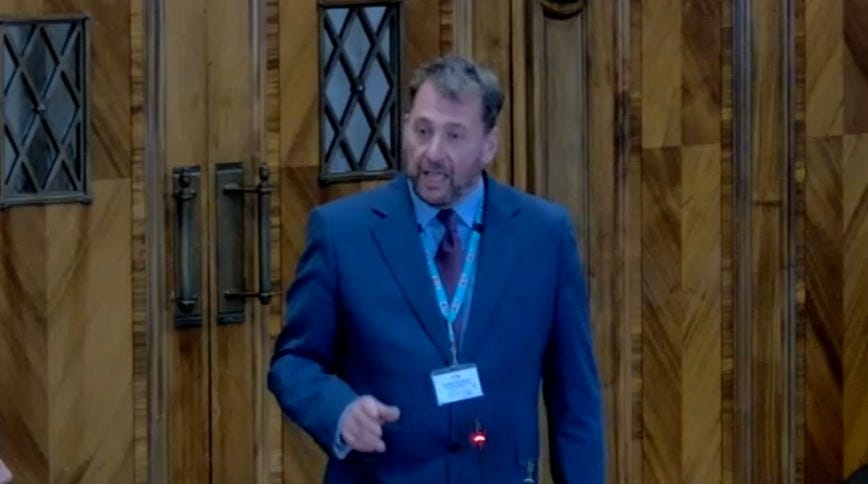
Presenting the case for the call-in, Our West Lancashire group leader Adrian Owens said a video posted on social media in May in which Cllr Roberts declared “he had the intention of withdrawing from the scheme[s]” pointed towards “evidence of predetermination”.
“These comments were made four months before any report came [to cabinet], before officers laid out the options and the implications of those options [and] before any equalities impact assessment was produced,” Cllr Owens said.
Cllr Roberts said that under government legislation it was permissible for him to be “predisposed” to a particular policy choice provided he was not “predetermined”.
He told the committee that he had never said in advance - either on social media or in a Guardian article on the subject - what “would” or “will” happen in relation to the issue.
“I have a view, but on the day of cabinet, I looked at all three options, I listened to the debate - and then I made my judgment after hearing everyone’s say,” Cllr Roberts said.
In addition to the chosen option of withdrawing from the schemes by 31 March 2027, the other two possibilities on the table were a more phased withdrawal or continuing with the current arrangements of the county council co-ordinating refugee support. The cabinet report did not recommend which of the options be pursued - and instead invited members to consider them all. That in itself was remarked upon as unusual during the meeting.
Cllr Roberts said he had been given legal advice that said he “was not [of] a predetermined opinion” and he therefore believed that “the public would also agree” that he had an open mind at the start of the cabinet meeting.
But Gina Dowding - deputy leader of the Progressive Lancashire official opposition group and another scrutiny committee member who had requested the call-in - rubbished the suggestion that there had been any meaningful debate during the cabinet gathering for Cllr Roberts to consider.
Noting that only one other cabinet member even spoke on the matter, she said: “I would go as far as to say it’s disingenuous of you to say that you came open-minded and you listened to the debate - ... it was absolutely clear that you’d made your mind up beforehand, because there was nothing that was said that anyone [could consider to have] influenced you,” Cllr Dowding said.
Telling the committee that the cabinet had been presented with a comprehensive set of reports, produced after 15 months of work on the issue, Cllr Roberts claimed that the call-in attempt was not “a complaint that something was left out - this was a complaint about the weight we gave to things that were in front of us”.
He added: “Members are entitled to disagree with that balance, but disagreeing with a judgement isn’t the same as saying the judgement was made wrongly.”
The cabinet decision does not mean the end of the support to which the refugees who have made Lancashire their home are entitled - nor even that more more of them will not be placed in the county in future. It determines only that the county council will not be responsible for overseeing that support network.
The call-in signatories had put forward a total of five ways in which they said the cabinet had breached the county council’s constitution in making the decision in the manner that it did - two of which revolved around financial considerations and a number of which appeared to draw directly from the contents of Appendix C.
As one of the proponents of the call-in, Progressive Lancashire group leader Azhar Ali claimed in his presentation to the committee that withdrawing the county council from the refugee schemes was “gesture politics” that would “cost the taxpayers of Lancashire over £1m a year” on an ongoing basis.
He and Cllr Owens noted that the Home Office funding for the refugee initiatives was used to finance services that also supported the wider population, suggesting that the county council was a net beneficiary of the cash coming from the government. These include a welfare rights team that Cllr Ali said had helped “some of the most vulnerable” claim £35.6m in benefits over a four-year period.
He added that the cabinet had been provided with “insufficient information into what services would be cut” as a result of the county council no longer administering the refugee programmes.
Liberal Democrat committee member - and call-in signatory - Mark Jewell asked whether the Reform administration was going to require council taxpayers to plug “the gap” in funding that he said would result from the decision or was instead prepared “to allow services to diminish”.
However, Cllr Roberts said there was “no reason” why the county council will not be able to claim the costs of delivering its continuing support for refugees from the authorities that will receive the government funding for the schemes once they assume overarching responsibility for delivering them.
Cllr Roberts highlighted that distinction as one of the main reasons for ending the authority’s co-ordinating role.
“We are not a housing authority - and yet housing sits right at the heart of these schemes, while the actual duty sits with the districts and the unitaries [Lancashire’s 14 other main councils].” Cllr Roberts said.
But he had no answer when it was pointed out that the majority of refugees - and the wider public - are in housing managed by private landlords, arguably undermining the credibility of his point about housing and a 40,000+ council house waiting list.
That is particularly pertinent because Cllr Roberts claims the reason they are not touching refugee schemes for people from Ukraine or Hong Kong is because they have no housing responsibilities in those areas.
Cllr Roberts said he considered it unfair that refugees received a “serious package of support” in their everyday lives - for between three and five years - that was not open to “any other vulnerable group in Lancashire”.
However, during the scrutiny committee hearing, Cllr Owens said it was not unusual for the authority to “tailor access to…services to people’s particular needs” - and ration them accordingly.
Cllr Roberts said it had arisen from the county council’s broader “efficiency review” and because a “procurement” decision was due on contracts related to the refugee schemes which were due for renewal.
However, that prompted Cllr Aidy Riggott to question whether the authority would be reassessing all of its non-statutory services when they came up for re-procurement.
“There is no say on whether we will look at [other] schemes or whether we won’t look at [other] schemes,” Cllr Roberts said.
Cllr Dowding asked Cllr Roberts whether he had ever “met any of the Afghan refugees who were fighting alongside our veterans”.
In response, he said that that had nothing to do with “the process” the committee was supposed to be judging, before claiming that there were “no registered [Afghan] veterans on this scheme currently”.
Clare Coupe, the county council’s director of communities and engagement, clarified the situation: “We do know that some people on the scheme are veterans, but we don’t know who,” she said.
But it is the row over whether the decision was pre-determined - and whether it was made for any reason other than to specifically target some minorities and be seen to be doing so - that could make the council particularly open to legal challenge.
That is something set out in Appendix C - withheld from the public but obtained by The Lancashire Lead - which shows the authority could be vulnerable to legal, financial and reputational risks by withdrawing from the schemes.